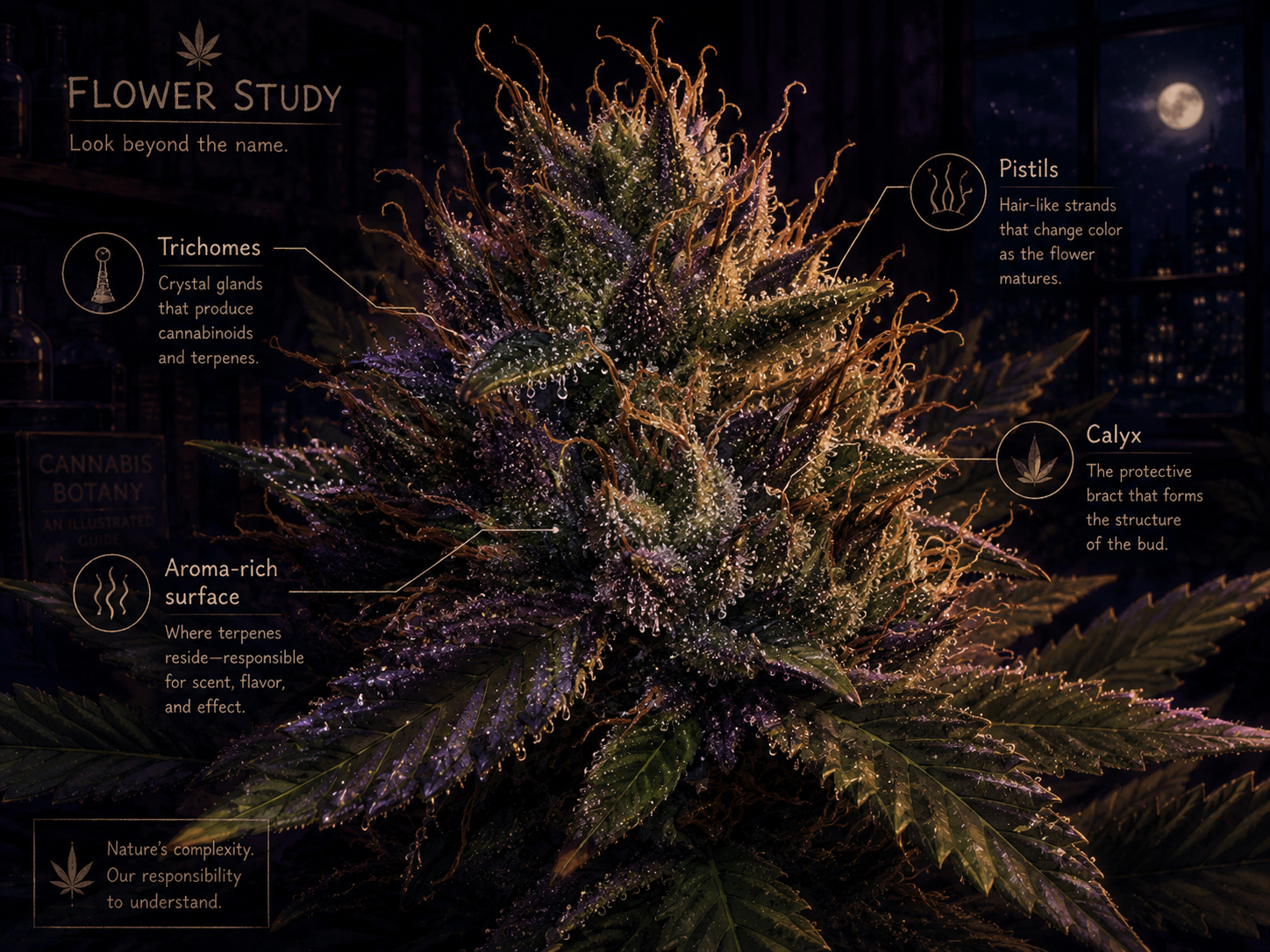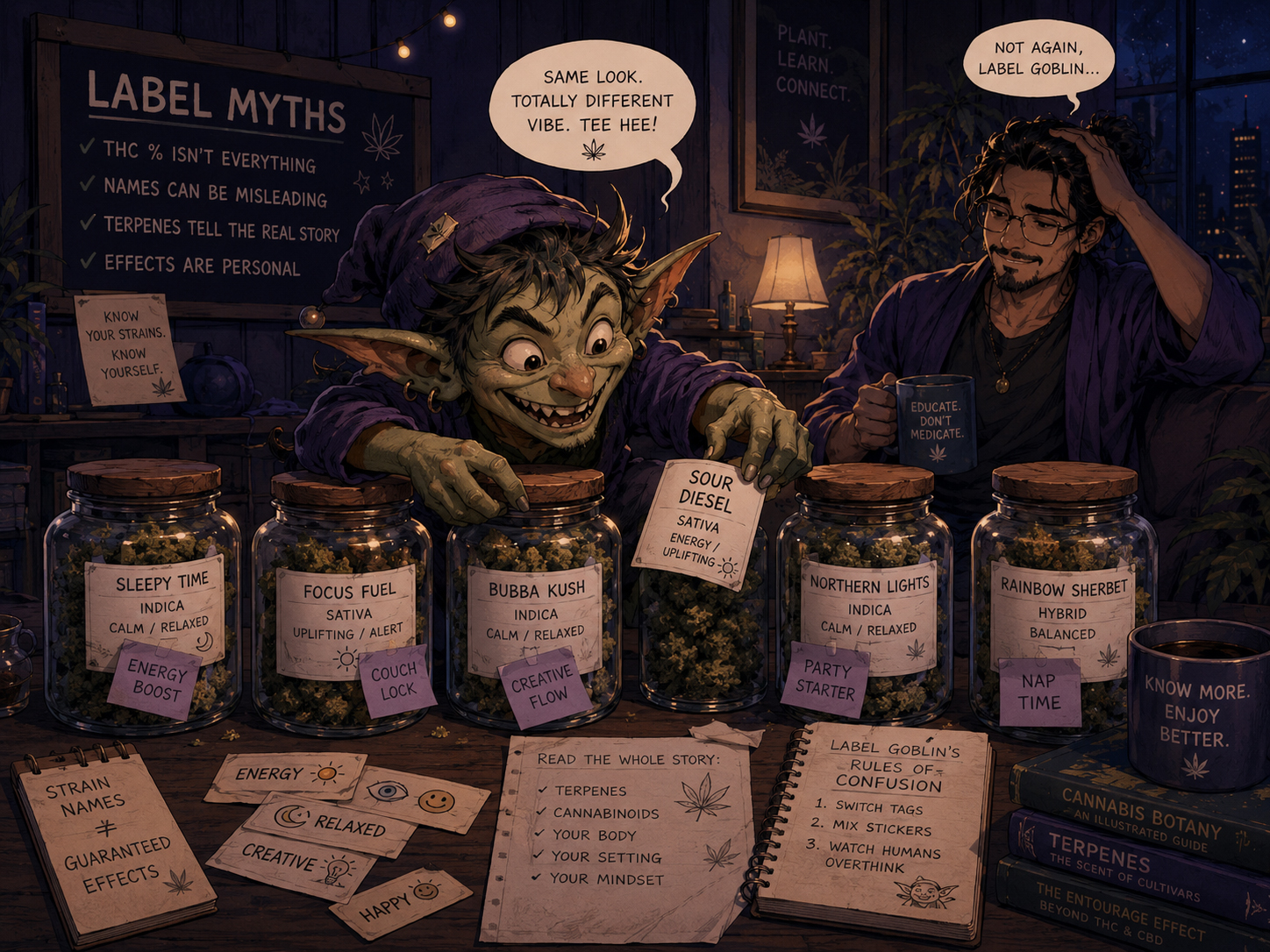
A strain name is a story. The label is the evidence.
Indica strain names can help people remember, compare, and discuss products. But names can also carry hype, nostalgia, and assumptions that outrun the data.
What is an indica strain?
In everyday cannabis language, an indica strain usually means a cultivar or product marketed under an indica-leaning category. That may suggest a certain cultural expectation — often cozy, evening-friendly, relaxing, or body-forward.
But a strain name by itself does not tell you the complete cannabinoid profile, terpene profile, product age, batch quality, potency, edible timing, vape ingredients, or how your body will respond.
Use strain names for orientation. Use labelling details for decisions.
Why strain names get confusing
Strain names travel through breeders, retailers, menus, folklore, packaging, and internet lists. Over time, one name can become a story that people repeat without checking the actual product in front of them.
Names are reused
A familiar name does not always mean the same grower, batch, genetics, or profile.
Names are marketed
A dramatic name can shape expectations before anyone reads the numbers.
Names are incomplete
The name rarely tells you enough about potency, terpene balance, ingredients, or warnings.
Common indica-style name themes
Indica-style names often lean into nighttime imagery, dessert flavors, fruit notes, purple color cues, kush heritage, or cozy mood language. Those themes can be fun and useful for memory, but they are not proof.
| Name theme | What it may suggest | What to verify |
|---|---|---|
| Purple names | Color, grape/berry associations, nighttime branding | Actual terpene profile, THC/CBD, batch data |
| Kush names | Lineage cue, earthy branding, classic indica culture | Grower, test results, product type, warning label |
| Dessert names | Sweet aroma or flavor marketing | Ingredients for edibles, potency, serving guidance |
| Nighttime names | Relaxation or evening-use positioning | Whether the product actually fits your tolerance and plans |
| Legacy names | Familiarity, reputation, nostalgia | Current batch details, not old internet lore |
What to read before trusting the name
If a product is marketed as an indica strain, read the label in this order:
Is it labeled indica, sativa, hybrid, or something else? Treat this as a starting point.
Look for THC, CBD, and any listed minor cannabinoids. Potency matters, but it is not everything.
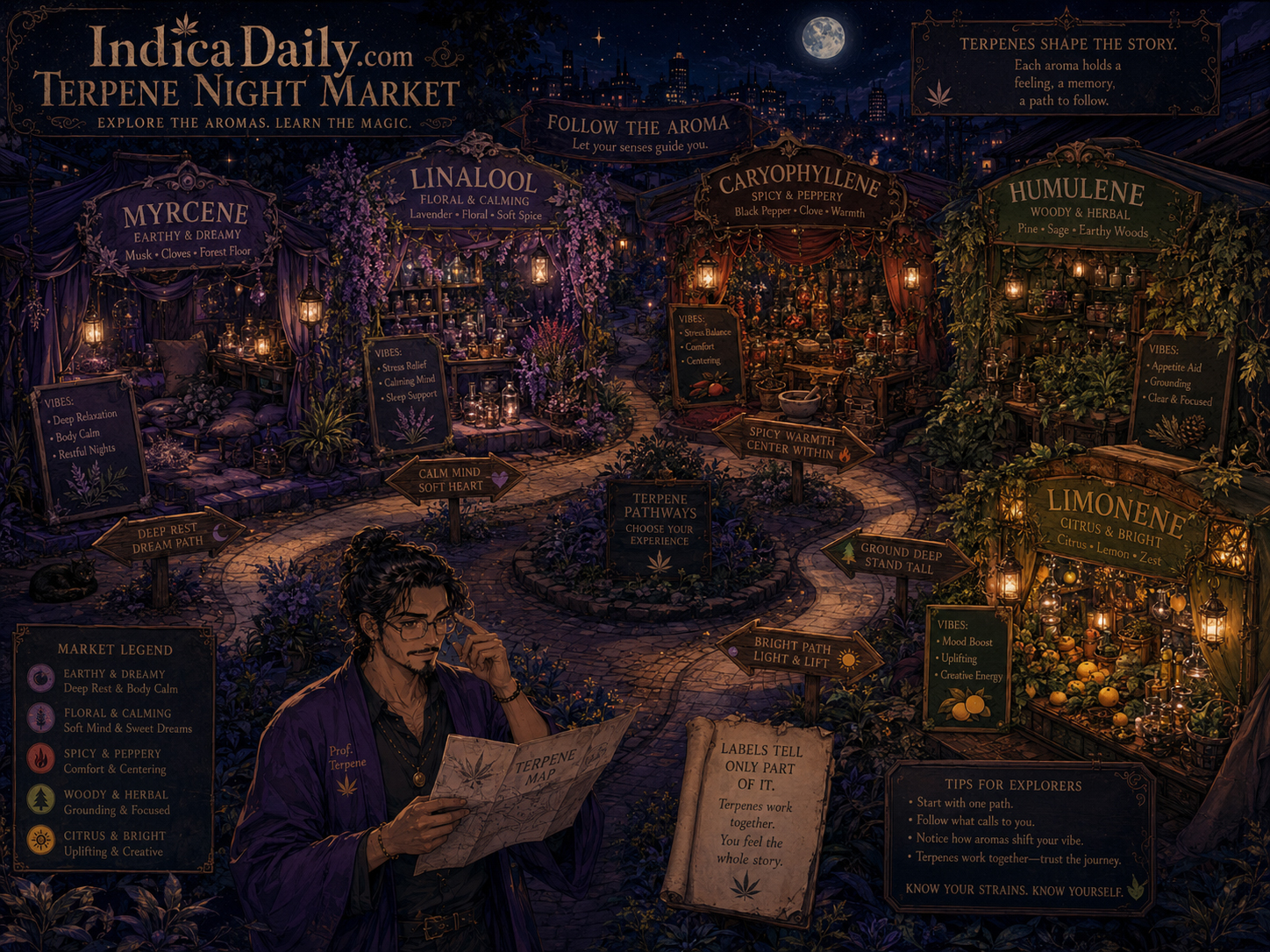
Check whether the label lists myrcene, linalool, caryophyllene, humulene, limonene, or other aroma clues.
Look for batch number, test date, packaging date, lab information, and any QR code or certificate reference.
Especially important for edibles, vapes, tinctures, and any product with added ingredients.
How to think about famous-sounding names
IndicaDaily avoids telling you to chase specific strains. The point is not “buy this name.” The point is “learn how names work.”
Track your own notes carefully
For adults where legal, personal notes can help you compare products more responsibly. Keep notes factual and modest: product name, product type, date, cannabinoid numbers, terpenes, timing, dose listed on the label, and general observations.
Avoid turning one experience into a universal law. Your own notes help you understand your own response. They do not predict everyone else’s.
Safety before strain loyalty
Brand loyalty and strain loyalty can make people ignore warnings. That is where Compliance Sensei steps in.
Adults 21+ only where legal. Keep products away from kids and pets. Do not drive or operate machinery after using cannabis. This page is educational only and is not medical or legal advice.
The bottom line
Indica strain names are useful for conversation, memory, and comparison. They are not enough for careful adult-use decisions. Read the whole label and let the product profile speak louder than the nickname.
Label Goblin loves shortcuts. Professor Terpene loves evidence.