A terpene profile is a clue map.
If “indica” is the headline, terpenes are part of the supporting evidence. They can help compare products, but they still work inside the larger reality of cannabinoids, dose, product type, and personal response.
What are terpenes?
Terpenes are aromatic compounds found in many plants. In cannabis culture, people discuss terpenes because they contribute to scent and flavor, and because different terpene profiles can help distinguish one product from another.
That does not mean a single terpene explains the entire experience. A product is not just one aroma molecule. It is a full chemical profile, a product format, a dose, a label, a person, and a setting.
The IndicaDaily terpene shortlist
These terpenes appear often in indica-style conversations and label-reading guides. Treat the descriptions as aroma language, not promised effects.
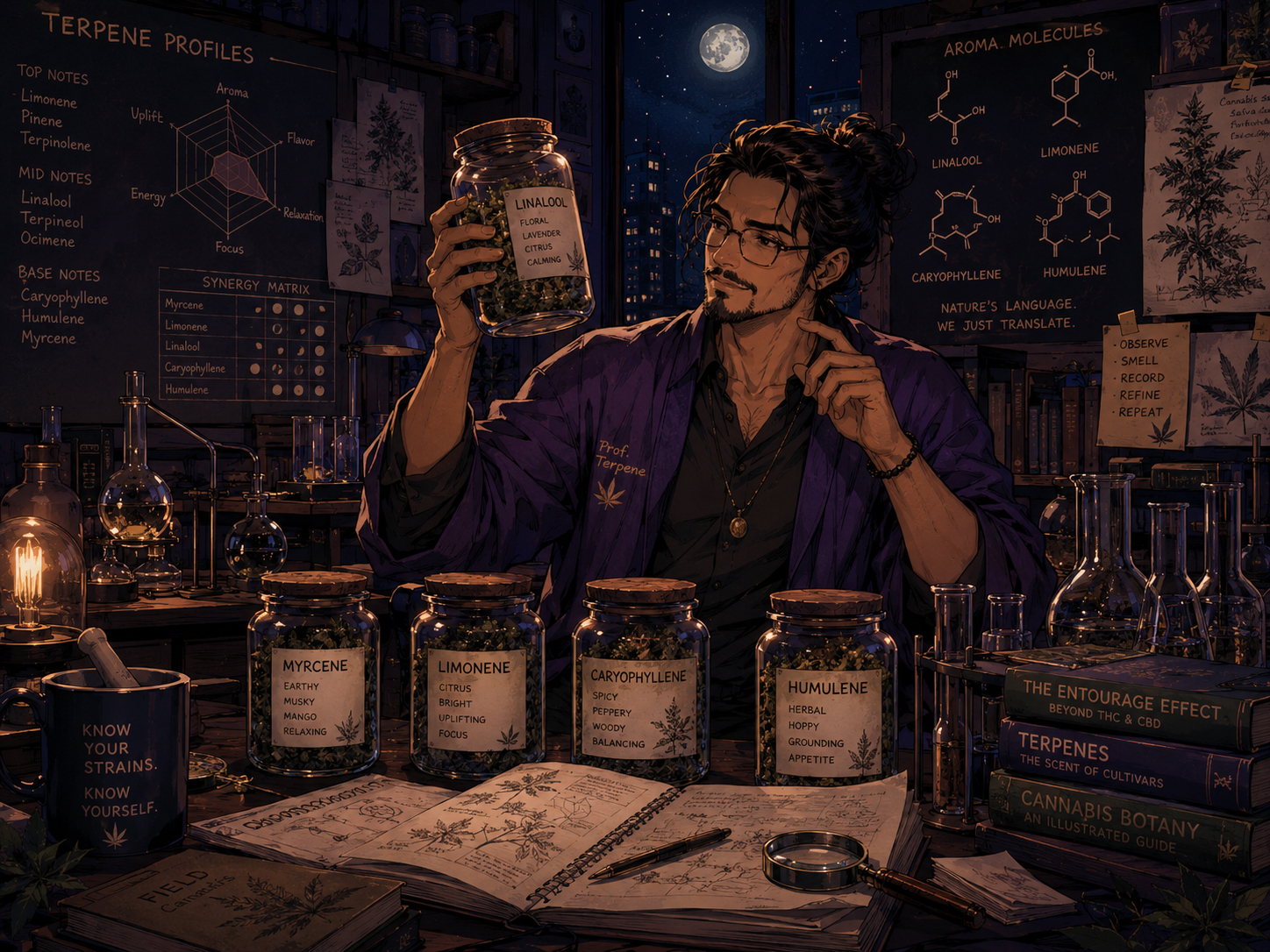
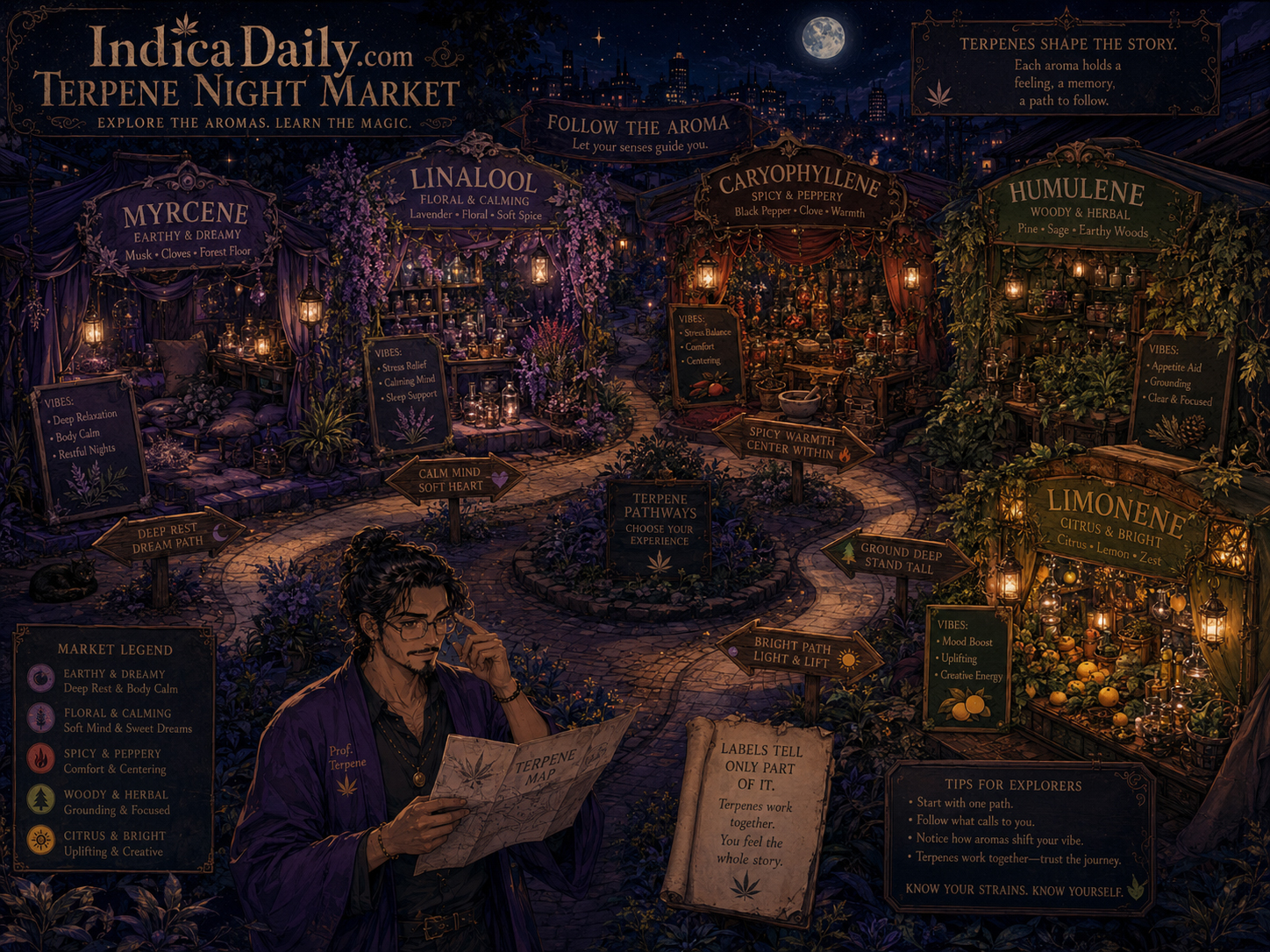
Myrcene
Often described as earthy, musky, herbal, resinous, or mango-like. In indica culture, myrcene is frequently part of the “cozy” folklore.
Linalool
Often described as floral or lavender-like. It shows up in many aroma discussions about calm, softness, and evening-style products.
Caryophyllene
Often described as spicy, peppery, woody, or warm. It gives some cannabis profiles a grounded, complex aromatic edge.
Humulene
Often described as woody, herbal, hoppy, or earthy. It is one of the terpene names that makes label reading feel like a botanical scavenger hunt.
Limonene
Often described as citrusy, bright, lemony, or zesty. Even on IndicaDaily, Captain Limonene occasionally kicks open the night-market door.
How terpenes appear on a cannabis label
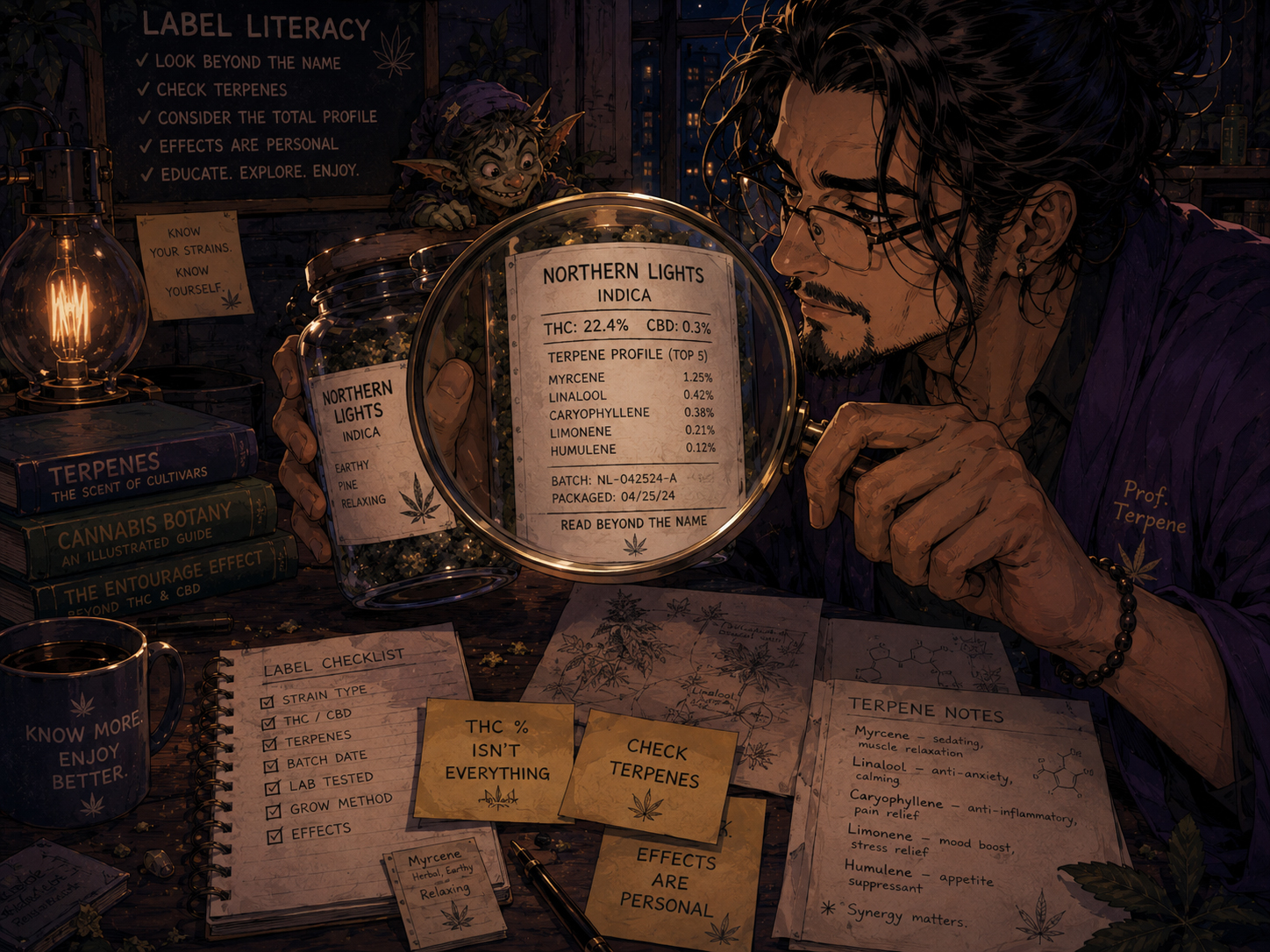
A good label may list terpenes by name and percentage. The exact layout varies, but the useful habit is the same: compare the whole profile instead of worshiping one line.
Example label section:

Terpene Profile
Myrcene ............... 1.25%
Linalool .............. 0.42%
Caryophyllene ......... 0.38%
Limonene .............. 0.21%
Humulene .............. 0.12%

Read this as aroma context, not a guaranteed effect chart.
Common terpene mistakes
Terpene education is useful. Terpene superstition is just Label Goblin wearing a lab coat.
| Mistake | Cleaner way to think |
|---|---|
| Assuming one terpene controls the whole experience | Look at the full profile: cannabinoids, terpene mix, product type, dose, and person. |
| Using aroma words as medical claims | Aroma descriptions are educational and sensory, not treatment advice. |
| Ignoring product type | Flower, edibles, vapes, tinctures, and concentrates can behave differently. |
| Chasing the highest number | Higher terpene percentage does not automatically mean “better.” Balance and quality matter. |
| Forgetting personal response | Effects vary by person, tolerance, context, and expectations. |
Madame Myrcene and the power of character shorthand
IndicaDaily turns terpenes into manga characters because memory loves characters. Madame Myrcene is not a scientific conclusion. She is a teaching device: earthy, relaxed, mellow, and dramatic enough to make you remember the label.
Madame Myrcene
She represents the earthy, musky, herbal side of indica aroma language. She also reminds readers not to turn personality into proof.
Meet the character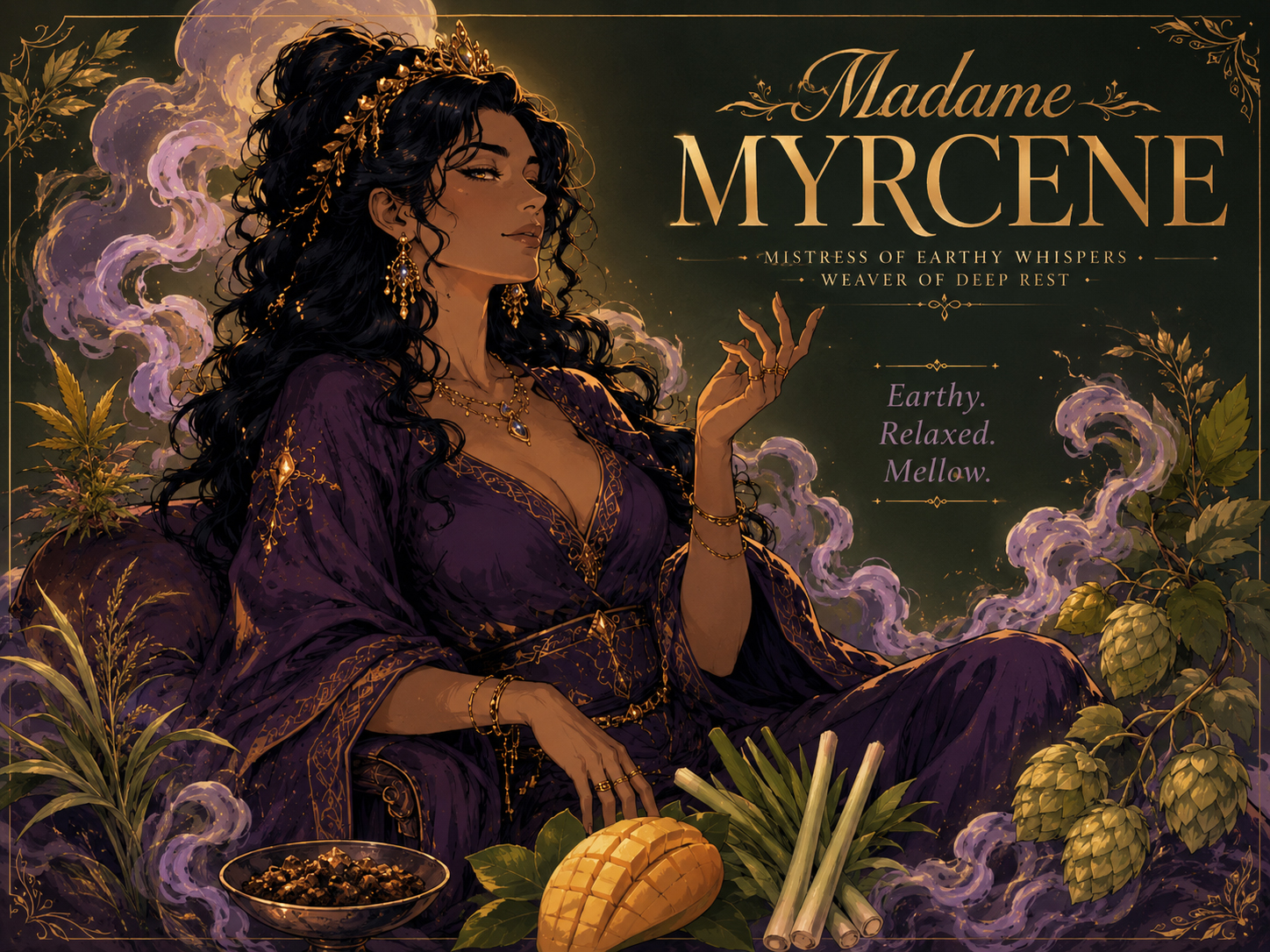
Better terpene questions
- Which terpenes are listed, and in what amounts?
- Is this profile similar to a product I have tracked before?
- What are the THC, CBD, and minor cannabinoid numbers?
- What product type is this: flower, edible, vape, tincture, or concentrate?
- Does the label include batch, test, ingredient, or warning information?
- Am I treating this as an aroma clue rather than a guaranteed effect?
Responsible terpene literacy
Terpene literacy should make cannabis culture more careful, not more overconfident. If a label gives you more information, use that information to ask better questions.
Adults 21+ only where legal. This page is educational only. It is not medical advice or legal advice. Do not drive or operate machinery after using cannabis. Keep products away from kids and pets.
The bottom line
Terpenes help explain aroma, flavor, and how cannabis products are described. They make labels richer and more useful. They do not erase the need for caution, personal tracking, product awareness, and responsible adult-use decisions.
Follow the aroma. Read the label. Do not let Label Goblin turn a terpene into a prophecy.