Indica is a clue, not a contract.
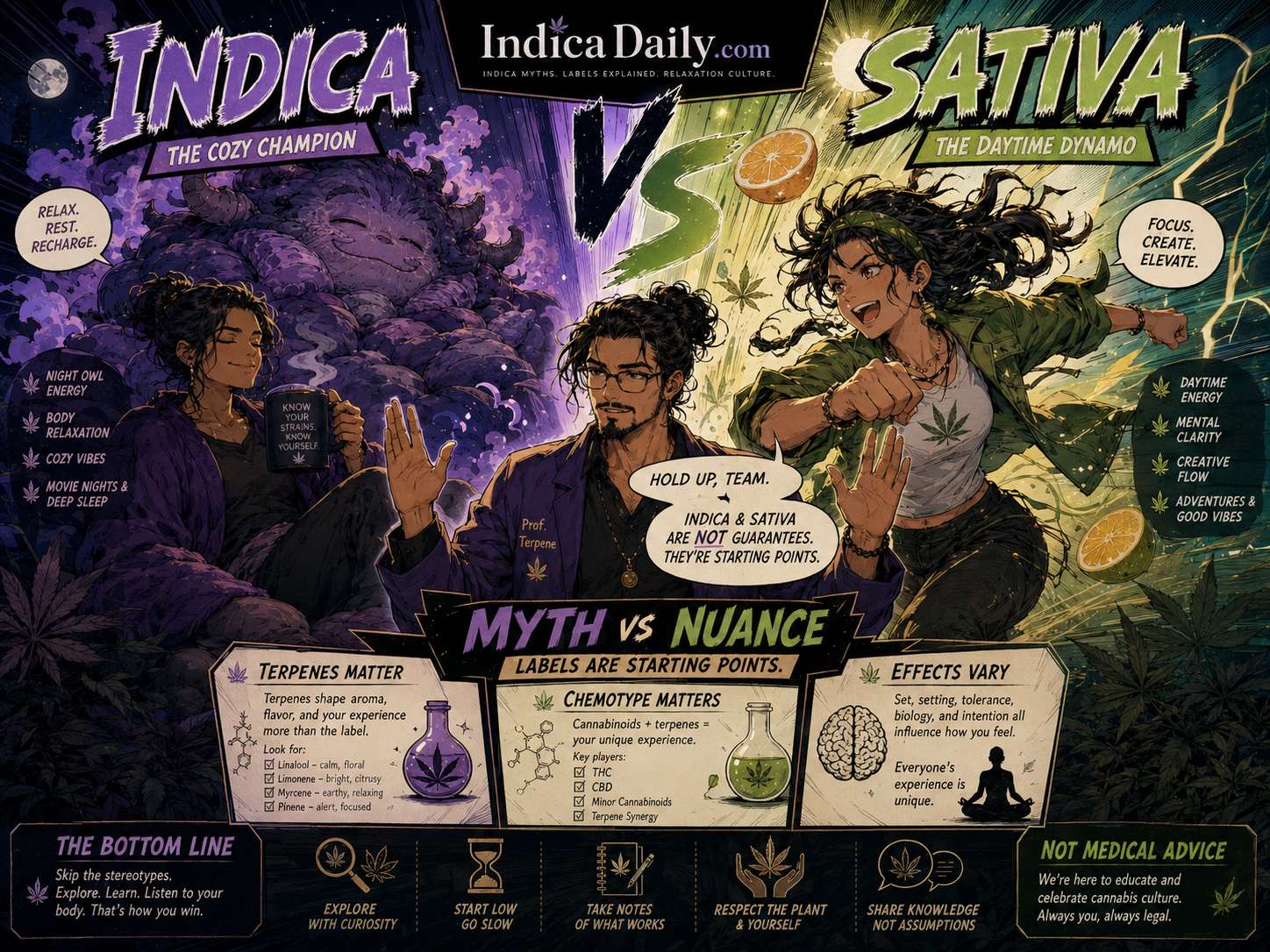
If a jar says “indica,” it gives you a starting point for questions. It does not hand you a scientific guarantee, a sleep prescription, or a personality test for your couch.
The modern meaning of indica
In everyday dispensary language, “indica” is commonly used as a market category. People often associate it with nighttime use, relaxation, heavier body sensations, and a slower mood. That cultural shorthand is why the word is everywhere.
The problem is that shorthand can become lazy. Two products labeled indica may have different cannabinoid levels, terpene profiles, harvest dates, extraction methods, edible timing, or vape ingredients. They may not feel the same.
Lazy myth
“Indica always makes everyone sleepy.”
Cleaner reality
“Indica is a category clue. Effects vary by product and person.”
Plant type versus product effect
Historically, cannabis classification has involved plant traits such as shape, growth pattern, geography, and breeding history. Modern retail language often turns those old categories into effect claims. That is where confusion enters.
Professor Terpene’s rule is simple: a plant category is not the same thing as a promised personal experience. A label can point you toward a profile, but it cannot know your body, your tolerance, your dinner, your mood, or your plans tomorrow morning.
Why indica effects can vary
Even when a product is marketed as indica, your experience may change based on several factors:
- Cannabinoids: THC, CBD, and minor cannabinoids can shape intensity and character.
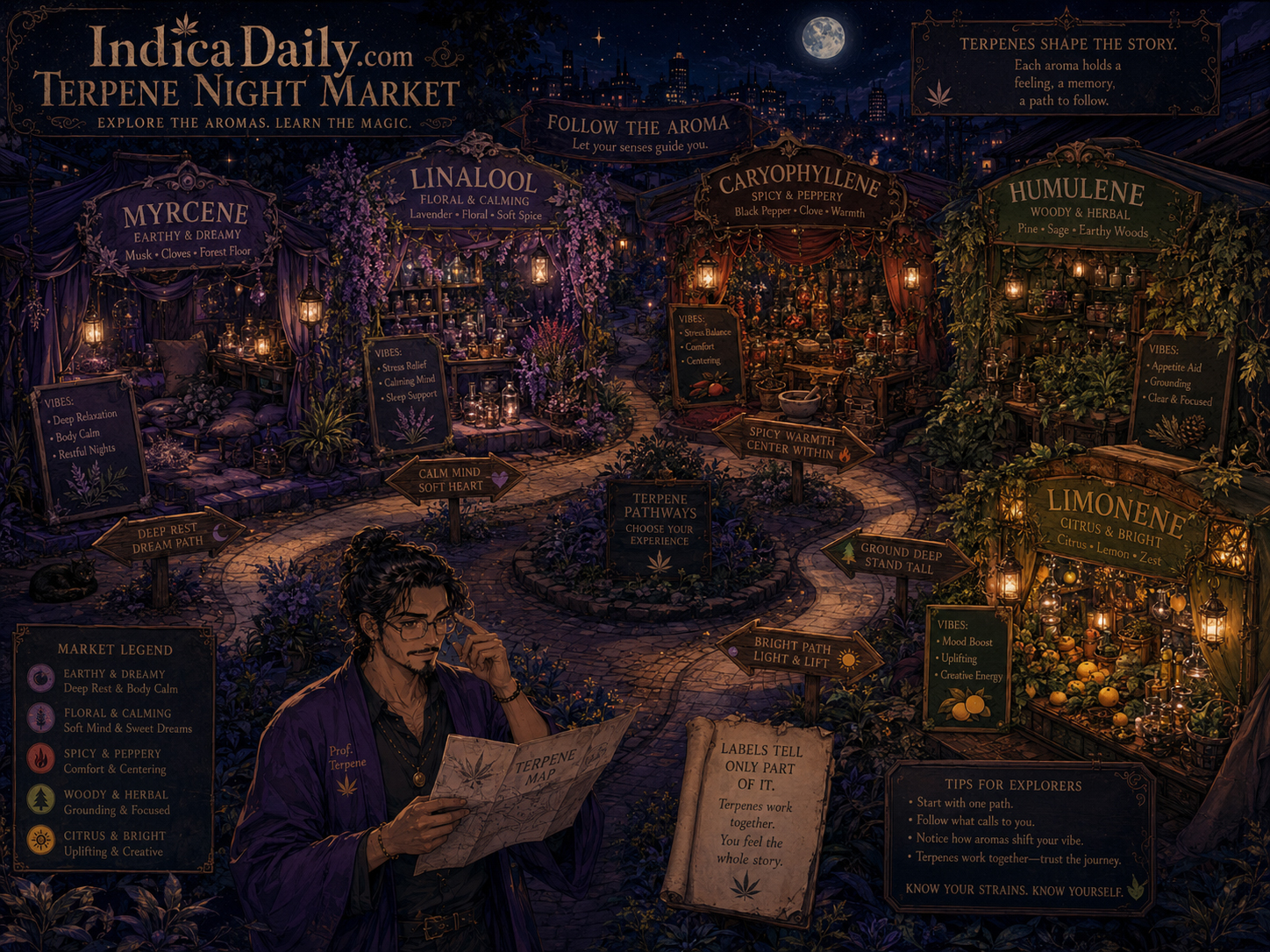
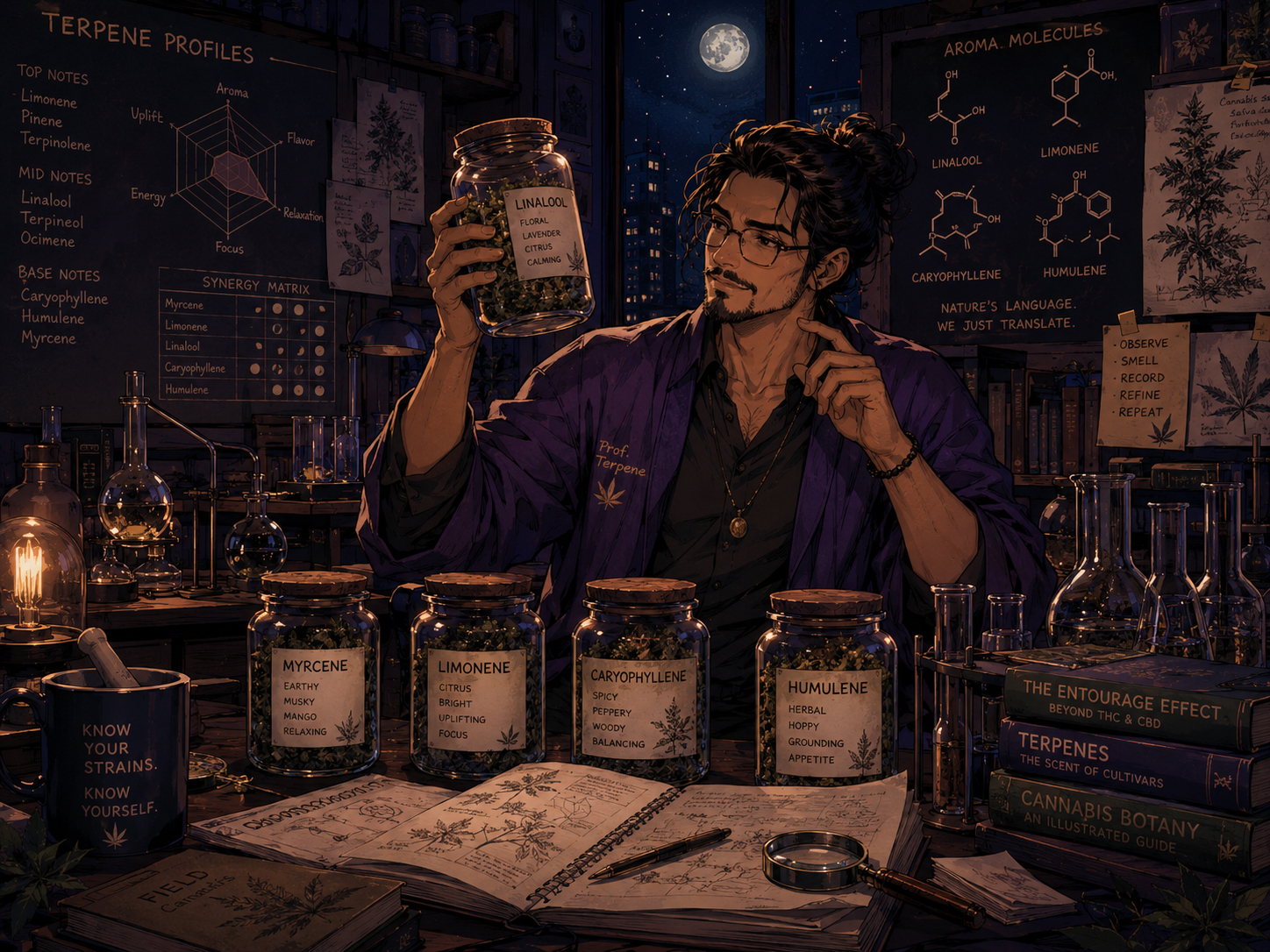
- Terpenes: Aroma compounds may influence the story people associate with a cultivar.
- Dose: More is not always better, especially with edibles.
- Product type: Flower, edibles, vapes, tinctures, and concentrates behave differently.
- Set and setting: Mood, location, company, food, hydration, and expectations matter.
- Your body: Tolerance, metabolism, prior experience, and individual biology matter.
How to read an indica label
Before trusting the big word on the front, read the smaller details. The smaller details are where the actual clues live.
| Label item | Why it matters |
|---|---|
| Strain or cultivar name | Useful for reference, but names can be reused, exaggerated, or marketed creatively. |
| Type: indica / sativa / hybrid | A broad category clue, not a guaranteed effect. |
| THC and CBD | Helps estimate potency and balance, but THC percentage is not the whole story. |
| Terpene profile | Gives aroma clues such as myrcene, linalool, caryophyllene, humulene, or limonene. |
| Batch and test date | Helps you compare products and avoid mystery packaging. |
| Ingredients and warnings | Especially important for edibles and vapes. |
Terpenes often mentioned with indica
Indica marketing often leans on aromatic ideas: earthy, musky, floral, spicy, woody, herbal, or hoppy. These descriptions are not medical claims; they are sensory clues.
Often described as earthy, musky, herbal, or mango-like.
Often described as floral or lavender-like.
Often described as spicy, peppery, or warm.
Responsible indica literacy
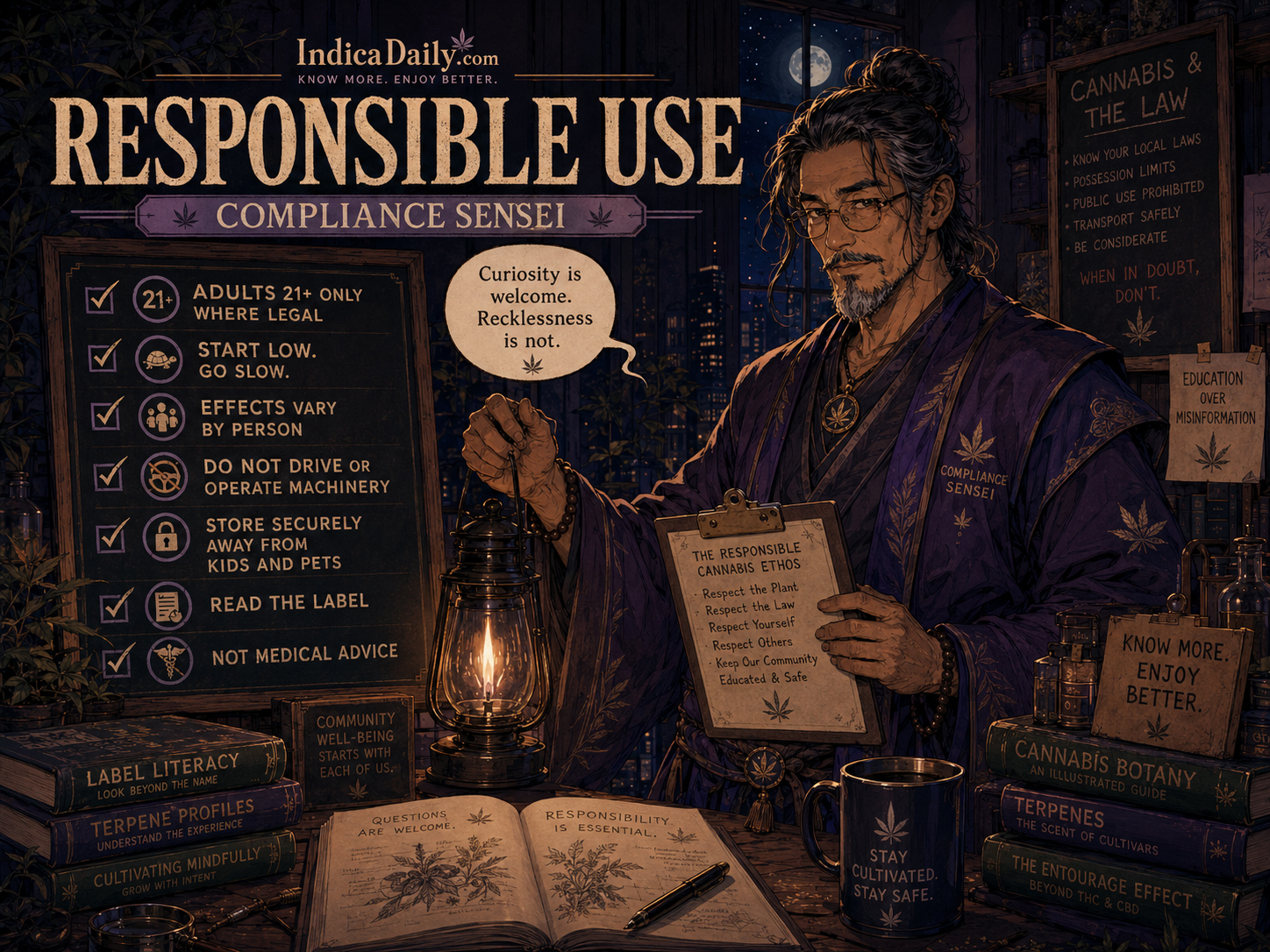
The best indica education is not “buy this for sleep.” It is “read the label, understand the limits, and make careful adult decisions.”
Adults 21+ only where legal. Do not drive or operate machinery after using cannabis. Keep products away from kids and pets. This site is educational only and is not medical or legal advice.
The bottom line
Indica can be a useful word, but only if you treat it as the beginning of the conversation. The label gives clues. The full product profile gives more clues. Your own experience, setting, and safety choices complete the picture.
Label Goblin wants you to stop at the nickname. Professor Terpene wants you to read the whole label.